BEYOND BINARIES
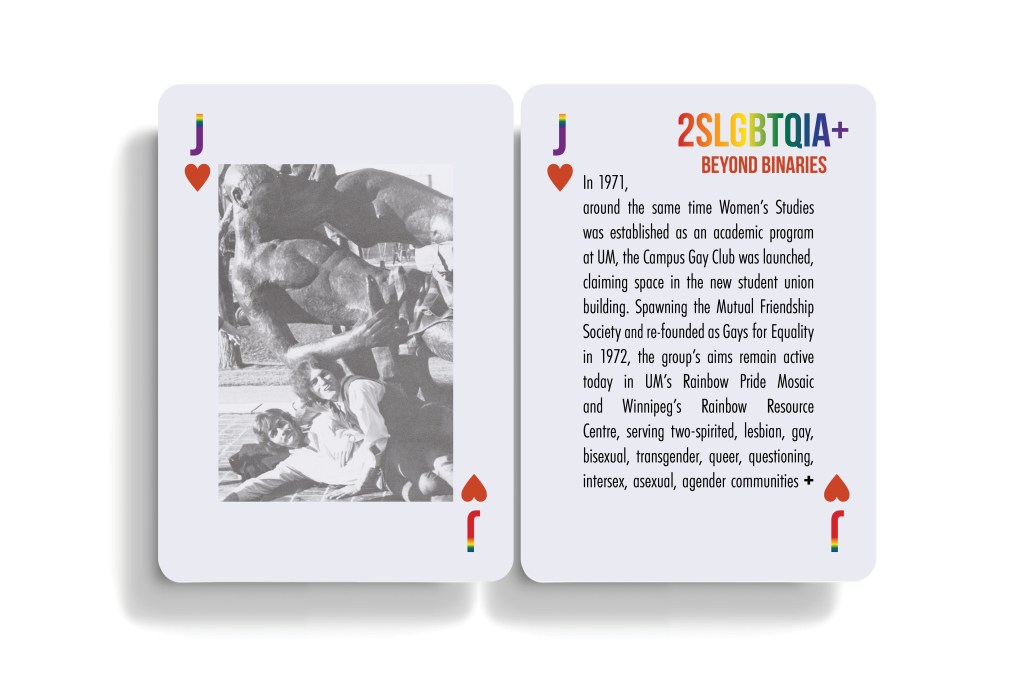
2SLGBTQIA+ intends to be inclusive of all queer individuals and communities. Identities listed on the card are not exhaustive: ‘+’ refers to myriad gender expressions and identities.
Meeting Places
Early records of queer communities in Winnipeg date to the inter-war period of the 1920s, as told through oral histories by those who experienced it. Prominent meeting spaces like the beer parlour of the Marlborough Hotel to cruising sites like the Canadian National rail yards at the forks of the Assiniboine and Red Rivers and the docks on Alexander Street feature in the stories recorded in the Manitoba Gay/Lesbian Archives’ Oral History Project.
Lesbian and Gay Liberation in Canada
The Lesbian and Gay Liberation in Canada (LGLC) project brings together accounts of over 34,000 events, people, and places that shaped the creation of gay political consciousness in Canada, spanning from the formation of the first homophile group in 1964 to the start of the AIDS crisis in 1981. Explore the movement, its politics, its victories, and its challenges through the LGLC database and contextual essays.
Rainbow Resource Centre
Rainbow Resource Centre offers support to the 2SLGBTQ+ community in the form of counselling, education, and programming for individuals ranging from children through to 55+. It also supports families, friends, and employers of 2SLGBTQ+ individuals.
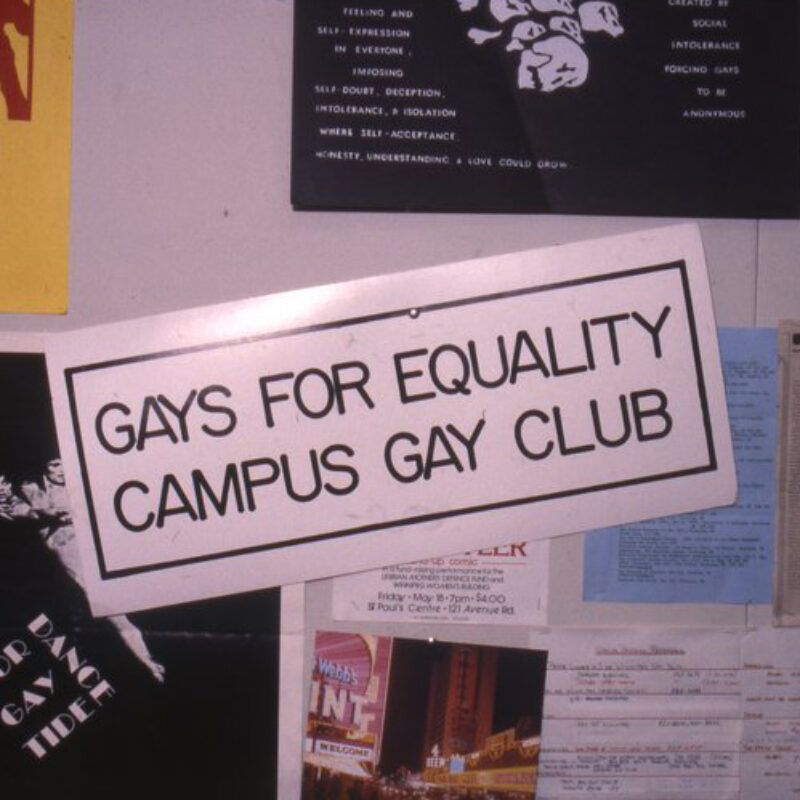
Rainbow Resource Centre began as a student group at the University of Manitoba in the early 1970s. First known as the Campus Gay Club, the name was changed in 1973 to Gays for Equality.
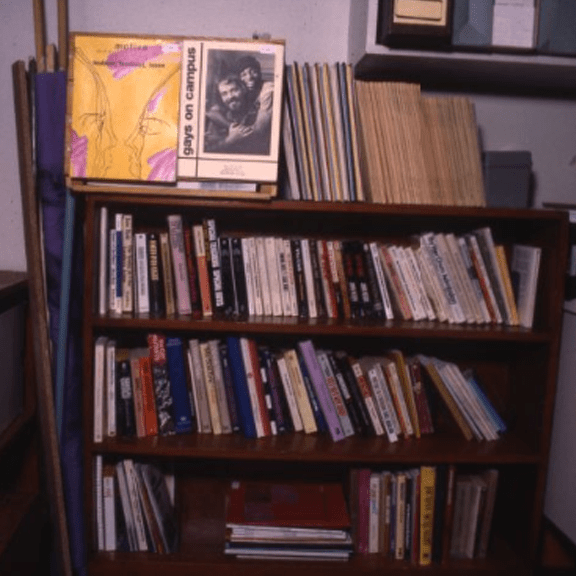
Gays for Equality offered a telephone information line, peer counselling service, and a resource library on the University of Manitoba campus. The group went on to become a leader and an important resource for the gay and lesbian community, providing community services, education, outreach, and political awareness and activism.
More on:
 UNSTACKING THE DECK: A GAME OF CHANGE